Best Real-Time Voice Translation Platforms in 2026: Why Voicli Is Built Differently
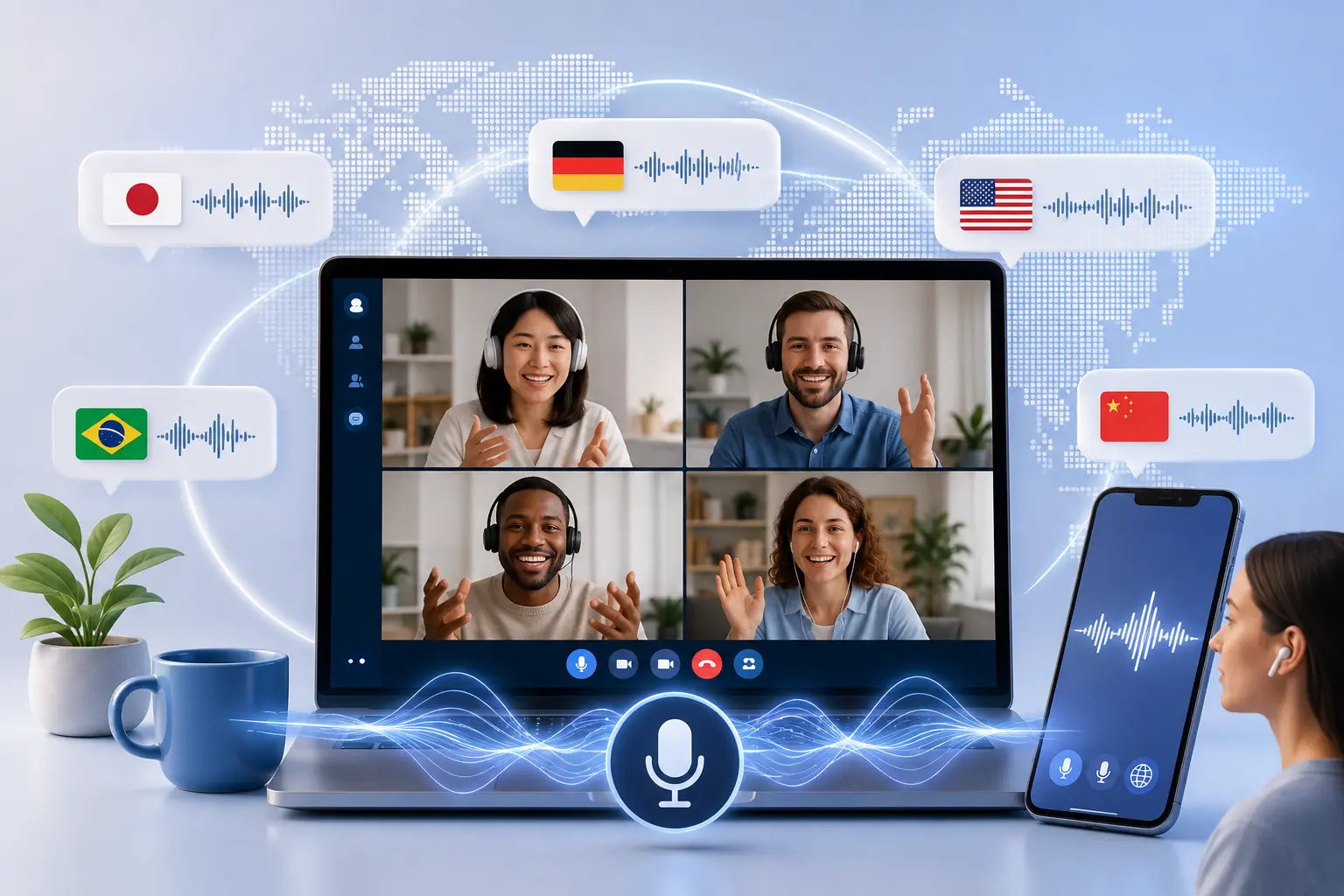
https://voicli.com/Real-time voice translation is quickly becoming one of the most important technologies for global communication.
International teams no longer have to choose between speaking a language they are uncomfortable with, reading translated subtitles throughout a meeting, or hiring an interpreter.
AI can now translate spoken conversations in real time.
Microsoft Teams, Zoom, Wordly, KUDO, Interprefy, and other platforms all offer different approaches to live translation.
But there is an important difference between adding translation to a meeting platform and building the meeting itself around multilingual conversation.
That is where Voicli takes a different approach.
1. Voicli — Best for Real-Time Multilingual Conversations
Voicli is a video meeting platform built specifically around real-time voice translation.
Instead of adding a translation bot, connecting another translation service, or asking participants to follow a separate translation interface, Voicli combines:
- video meetings
- real-time AI voice translation
- translated subtitles
- individual language preferences
- original and translated audio controls
inside the same meeting experience.
The idea is simple:
You speak your language. Other participants speak theirs. Voicli handles the language barrier.
Why Voicli Is Different
Most video conferencing platforms were created first for people who already understand each other.
Translation came later.
Voicli starts with a different assumption:
What if the participants don't speak the same language at all?
The entire meeting experience is designed around that scenario.
No Separate Translation Service
You don't need to run a Zoom meeting and connect another translation platform.
You don't need a translation bot joining your call.
You don't need participants switching between the meeting and another translation application.
The video meeting and translation happen in Voicli.
Built for Conversation, Not Just Listening
A conference presentation and a business conversation are very different.
At a conference, communication often looks like:
Speaker → Audience
A real conversation looks like:
Person A → Person B → Person A → Person C → Person B
People ask questions.
They respond.
They explain.
They negotiate.
They change direction.
Voicli is designed for this kind of multilingual interaction.
Everyone Can Speak Their Own Language
Consider a meeting between participants from Japan, Germany, Ukraine, and Brazil.
They shouldn't have to agree that everyone will speak English.
Each participant can communicate in the language they are most comfortable using while translation helps the others follow the conversation.
This changes the purpose of translation.
Instead of helping people understand a foreign-language meeting, Voicli helps them have a multilingual meeting.
Voicli Real-Time Translation Modes
Different conversations require different levels of translation.
Voicli provides three ways to follow a meeting.
Original
Hear the speaker's original voice.
Useful when participants already understand the language.
Subtitles
Hear the original speaker while reading translated subtitles.
This works well for presentations, training sessions, and situations where participants understand some of the language but need additional support.
Premium Real-Time Voice Translation
Voicli translates spoken language and generates translated speech in real time.
Participants can also control the balance between original and translated audio.
The goal is simple:
Spend less time thinking about translation and more time thinking about the conversation.
Real-Time Voice Translation Platforms Compared
| Platform | Video Meetings | Translation Setup | Best For |
|---|---|---|---|
| Voicli | Built in | Native | Multilingual conversations |
| Microsoft Teams | Built in | Native | Microsoft ecosystem |
| Zoom | Built in | Native | General video conferencing |
| Wordly | Integrations | Additional layer | Meetings & events |
| KUDO | Platform + integrations | Depends on setup | AI + human interpretation |
| Interprefy | Platform + integrations | Depends on setup | Enterprise interpretation |
All of these platforms can be useful.
But they solve slightly different problems.
Voicli's advantage isn't simply that it can translate speech.
Its advantage is that multilingual communication is the core product rather than an additional meeting capability.
2. Microsoft Teams Interpreter
Microsoft Teams offers an AI Interpreter capable of real-time speech-to-speech translation.
It is an impressive solution, particularly for organizations already operating inside Microsoft 365.
Participants can select a preferred language and hear other speakers translated. Microsoft can even simulate characteristics of the speaker's voice.
However, Teams Interpreter comes with ecosystem and access requirements.
It is connected to Microsoft 365 and Copilot licensing, and access can depend on the participant's account and license.
This matters for external communication.
Imagine a recruiter interviewing candidates from several countries, a salesperson meeting international prospects, or a consultant talking with new clients.
Requiring every external participant to have the appropriate ecosystem access can add friction.
Voicli is designed specifically around making the multilingual meeting itself the product.
Choose Microsoft Teams when:
Your organization already relies heavily on Microsoft 365 and most participants are inside that ecosystem.
Choose Voicli when:
You regularly need multilingual conversations with customers, candidates, partners, or other external participants and want a dedicated meeting experience built around translation.
3. Zoom
Zoom is one of the world's best-known video conferencing platforms and offers translated captions.
For existing Zoom customers, this can be convenient.
But Zoom remains a broad communications platform.
It needs to solve dozens of communication problems:
webinars, meetings, phone, workplace collaboration, events, contact centers, and more.
Voicli has a narrower purpose:
help people who speak different languages talk to each other naturally.
That specialization allows the product experience to focus specifically on multilingual communication rather than treating translation as one feature among many.
Choose Zoom when:
You already use Zoom across your organization and translation is an occasional requirement.
Choose Voicli when:
Language differences are a central part of the conversations you need to have.
4. Wordly
Wordly is one of the strongest specialized AI translation products available.
It provides real-time translated audio, captions, transcripts, and summaries and supports meetings, conferences, webinars, and in-person events.
Its strength is flexibility.
Wordly can add translation to existing meeting and event environments.
For example, organizations can connect it to existing conferencing platforms, and participants can access translations through dedicated interfaces.
That makes Wordly particularly powerful for events and organizations that already have meeting infrastructure.
But it also demonstrates the difference in Voicli's approach.
With Wordly, translation can be a service connected to the meeting.
With Voicli, translation is inside the meeting experience from the beginning.
Choose Wordly when:
You need translation across conferences, webinars, in-person events, and multiple existing platforms.
Choose Voicli when:
You primarily need direct multilingual video conversations without assembling separate meeting and translation services.
5. KUDO
KUDO specializes in multilingual communication and combines AI speech translation with professional human interpretation.
That combination is particularly valuable for:
- international conferences
- government organizations
- large corporate events
- high-stakes meetings
- situations requiring professional interpreters
It is a sophisticated interpretation platform.
But not every multilingual conversation requires interpretation infrastructure.
A recruiter interviewing an international candidate doesn't necessarily need to arrange an interpreter.
A salesperson talking to a prospect shouldn't need an event interpretation workflow.
Two companies exploring a partnership may simply need to talk.
That is the type of everyday multilingual communication Voicli is designed to simplify.
6. Interprefy
Interprefy is another powerful enterprise interpretation solution.
It supports AI speech translation, captions, professional interpreters, and multilingual events.
For organizations running large international conferences or complex hybrid events, these capabilities can be extremely valuable.
Voicli focuses on a different problem.
Instead of asking:
How do we add interpretation to this event?
Voicli asks:
How can these people simply talk to each other despite speaking different languages?
That difference defines the product.
Where Voicli Has the Biggest Advantage
The clearest advantage appears in interactive cross-language conversations.
International Recruitment
Imagine a Japanese software engineer interviewing with an American company.
The engineer may be excellent at software development but uncomfortable conducting a complex technical interview in English.
Without translation, the company may accidentally evaluate two things simultaneously:
technical ability + English ability
Voicli can help separate them.
The candidate explains technical concepts in the language they know best.
The interviewer follows through translation.
The conversation can focus more on professional knowledge and less on language proficiency.
International Sales
Language barriers reduce the size of a company's potential market.
A salesperson who speaks English cannot easily conduct detailed conversations with every Japanese, Korean, Spanish, Turkish, or Portuguese-speaking prospect.
Real-time voice translation changes the equation.
Instead of:
Can we sell to people who speak our language?
companies can start asking:
Who actually needs our product?
International Partnerships
Early partnership discussions are highly conversational.
People interrupt.
They brainstorm.
They explain complicated ideas.
They ask unexpected questions.
Text translation is useful, but constantly reading subtitles can change the rhythm of the conversation.
Voice translation allows participants to keep more of their attention on each other.
Consulting
A consultant's potential market should not have to end where their language skills end.
Real-time voice translation can make conversations possible with clients who would otherwise require a bilingual employee or interpreter.
Global Teams
English is frequently used as the common language of international companies.
But "speaks English" and "can express complex ideas naturally in English" are not the same thing.
Employees may understand English while still being much more precise, confident, and expressive in their native language.
Real-time translation gives them another option.
Why Translated Voice Matters More Than Captions Alone
Translated subtitles are extremely useful.
But imagine conducting a 45-minute negotiation while reading almost everything the other person says.
You are technically communicating.
But your attention is divided between:
- reading
- listening
- watching the speaker
- preparing your response
- understanding the business context
Voice translation tries to reduce that cognitive load.
The closer translation gets to ordinary listening, the less users have to think about the translation technology itself.
That is ultimately the goal.
The best translation experience is the one you gradually stop noticing.
Translation Shouldn't Require Everyone to Speak English
For decades, global business has solved language differences by choosing a common language.
Usually English.
That works — but it doesn't remove the language barrier.
It simply determines who has to carry it.
A native English speaker can concentrate completely on:
- ideas
- negotiation
- emotion
- strategy
- persuasion
while the other participant may simultaneously be thinking about:
- vocabulary
- grammar
- pronunciation
- accent
- whether they understood correctly
AI voice translation has the potential to make that relationship more balanced.
Instead of forcing everyone into one language, technology can adapt the conversation to each participant.
Which Real-Time Voice Translation Platform Should You Choose?
There isn't one solution for every scenario.
Choose Microsoft Teams if your organization already operates inside Microsoft 365 and needs translation inside that environment.
Choose Zoom if you already use Zoom and translation is another capability you want inside your existing conferencing stack.
Choose Wordly if you need translation across meetings, webinars, conferences, and in-person events.
Choose KUDO or Interprefy if enterprise interpretation, professional interpreters, or large multilingual events are important.
And choose Voicli when the problem you want to solve is:
"We need to talk, but we don't comfortably speak the same language."
No separate interpreter workflow.
No separate video meeting platform.
No need to make everyone switch to English.
Just a multilingual conversation.
The Future Is Not One Global Language
The internet connected people globally.
Video conferencing allowed them to see and hear each other from anywhere.
But one barrier remains:
language.
For years, technology tried to solve that problem by translating text.
Now it can increasingly translate the conversation itself.
The next generation of international communication may therefore look very different.
A Japanese recruiter speaks Japanese.
A German candidate speaks German.
A Ukrainian founder speaks Ukrainian.
A Brazilian customer speaks Portuguese.
And everyone understands the conversation.
That is what real-time voice translation should ultimately make possible.
And that is what Voicli is being built to make simple.
Try Real-Time Voice Translation with Voicli
Start a multilingual video meeting where participants can speak naturally in their own languages.
Speak your language. Understand theirs.
Try Voicli for free.