Can Audio Translators Translate in Real Time? A Guide to Live Voice Translation
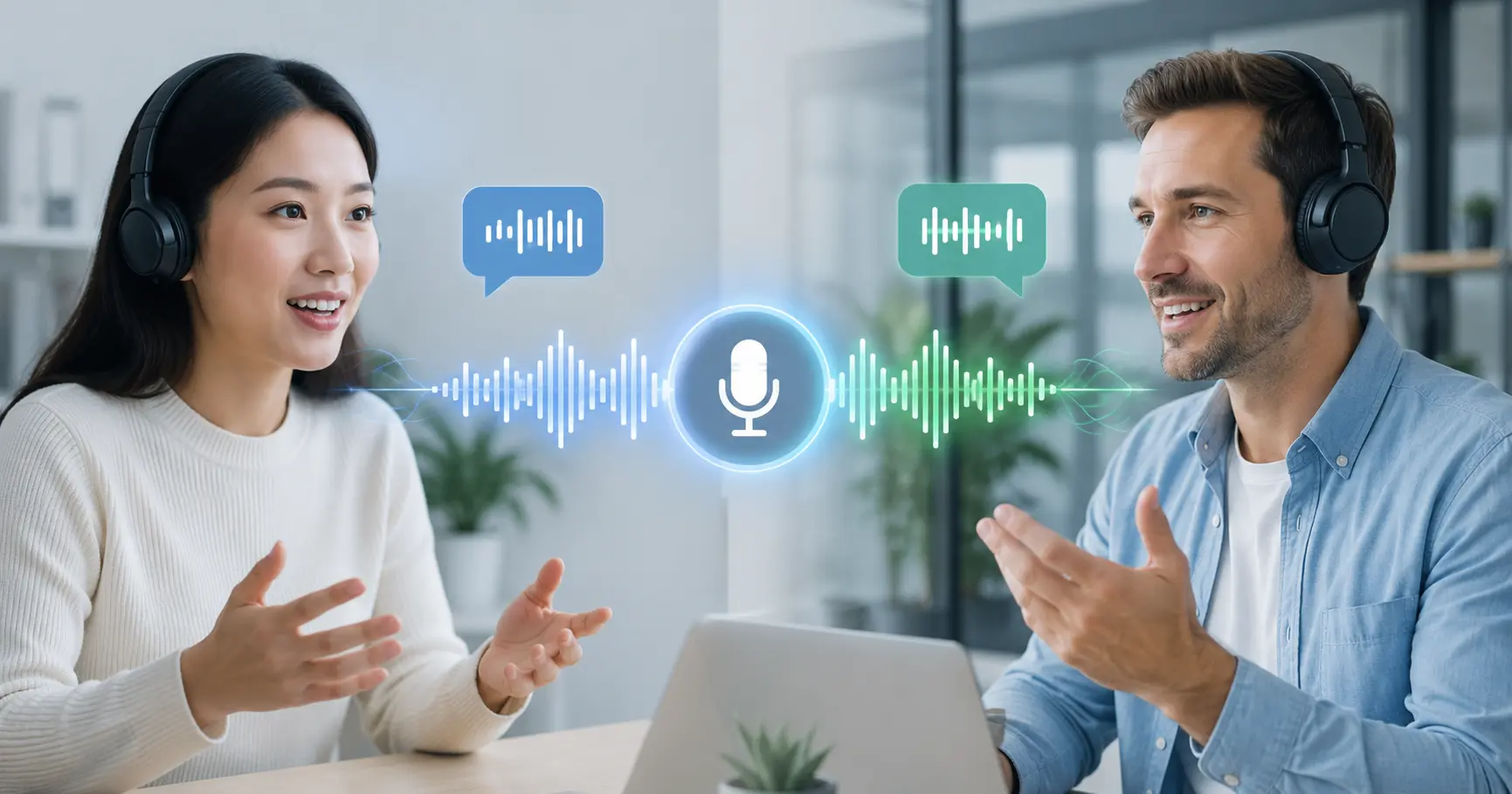
Yes, audio translators can translate in real time. Modern AI-powered translation technology can listen to spoken language, understand what a person is saying, translate the speech into another language, and generate translated audio for the listener — all while the conversation is still happening.
This technology is often called real-time audio translation, live voice translation, or real-time speech translation.
Instead of stopping a conversation to type text into a translator, people can speak naturally and hear the translation during a live conversation. This makes real-time audio translation especially useful for international meetings, recruitment interviews, customer calls, education, remote teams, and conversations between people who do not share the same language.
But how does real-time audio translation actually work, and can it replace traditional translation tools or human interpreters?
Let's take a closer look.
What Is a Real-Time Audio Translator?
A real-time audio translator is software that translates spoken language while a conversation is taking place.
Traditional translation usually requires several separate steps:
- Someone speaks.
- The speech is recorded or converted into text.
- The text is translated.
- The translation is read or played back.
Modern AI systems can perform these processes almost simultaneously.
For example, imagine two people joining a video meeting.
One participant speaks English and the other speaks Japanese.
The English speaker can continue speaking English while the Japanese participant receives the conversation translated into Japanese. When the Japanese participant responds in Japanese, the English participant can receive the response translated into English.
Neither person necessarily needs to speak the other person's language.
This creates something much closer to a natural multilingual conversation.
How Does Real-Time Audio Translation Work?
Real-time voice translation typically combines several AI technologies.
1. Speech Recognition
First, the system needs to understand what the speaker is saying.
Speech recognition technology analyzes the audio and identifies spoken words, sentences, pauses, and other elements of speech.
Modern speech recognition models can work with many languages and accents.
2. Language Understanding
Recognizing individual words is not enough.
The system also needs to understand the context of the conversation.
For example, the same word can have different meanings depending on whether people are discussing technology, recruitment, medicine, finance, or everyday life.
Modern AI models can use the surrounding conversation to determine the intended meaning.
3. Real-Time Translation
The recognized speech is then translated into the listener's preferred language.
Unlike simple word-for-word translation, modern AI translation systems attempt to preserve the meaning of the entire sentence.
This is particularly important during natural conversations where people use expressions, incomplete sentences, industry terminology, or informal language.
4. Voice Generation
The translated text can then be converted back into speech.
Instead of reading subtitles, the listener can hear the translated version of what the other participant said.
The entire process can happen within seconds.
Can Audio Translators Translate Live Conversations?
Yes.
Real-time audio translation can be used during live conversations, including:
- video meetings;
- online interviews;
- international business calls;
- customer support conversations;
- remote team meetings;
- sales calls;
- online education;
- consultations;
- conferences;
- conversations with international clients or partners.
This is one of the biggest differences between traditional translation tools and modern live voice translation platforms.
With traditional tools, users often need to interrupt the conversation, copy text, wait for a translation, and then continue.
Real-time translation is designed to keep the conversation moving.
Can Real-Time Translation Work During Video Calls?
Yes. Live audio translation can be integrated directly into video communication.
This can be particularly useful because language barriers often become more noticeable during live calls than in emails or text messages.
When writing an email, a person can use a translation tool, check the result, rewrite a sentence, and take as much time as necessary.
A video call is different.
People need to understand questions immediately and respond quickly.
Someone may understand written English well but still feel uncomfortable speaking English during a live meeting.
Real-time voice translation can reduce this problem by allowing participants to communicate using the language in which they are most comfortable.
Real-Time Audio Translation vs. Subtitles
Live subtitles and live voice translation solve related but different problems.
Live subtitles convert speech into text that appears on the screen.
Live translated subtitles convert that speech into text in another language.
Live voice translation goes one step further by generating translated audio that the other participant can hear.
For some conversations, subtitles are enough.
For longer meetings, interviews, negotiations, or conversations where participants need to focus on each other rather than continuously reading the screen, translated audio can provide a more natural experience.
Some platforms can combine both approaches.
Can Multiple Languages Be Translated in the Same Meeting?
Modern AI translation systems can support multilingual meetings where different participants prefer different languages.
Imagine an international meeting with participants who speak:
- English;
- Spanish;
- Japanese;
- Korean;
- Ukrainian.
Instead of requiring everyone to speak English, each participant could potentially select a preferred language and receive translated speech in that language.
This changes the traditional model of international communication.
Instead of choosing one common language for the entire meeting, translation technology can make the meeting adapt to each participant.
What Are the Benefits of Real-Time Voice Translation?
The most obvious benefit is removing language barriers, but the impact can be broader.
More Natural Communication
People can speak in the language they know best instead of constantly translating their thoughts before speaking.
Access to More International Talent
Companies may be able to communicate with strong candidates who have the required professional skills but are less confident speaking the company's primary language.
This can be especially useful during international recruitment and initial candidate interviews.
Better International Customer Communication
Businesses can communicate with customers who would otherwise require a bilingual employee or interpreter.
Easier Global Collaboration
International teams can communicate without requiring every employee to reach the same level of fluency in a shared language.
Greater Confidence During Live Calls
A person may understand another language but still struggle with pronunciation, unfamiliar accents, fast speech, or specialized vocabulary.
Real-time translation can make live conversations more accessible.
What Are the Limitations of Real-Time Audio Translation?
Real-time translation technology has improved significantly, but it is not perfect.
Accuracy can depend on several factors, including:
- microphone quality;
- background noise;
- accents;
- speaking speed;
- overlapping speakers;
- specialized terminology;
- names and abbreviations;
- context;
- internet connection.
There is also usually some delay between the original speech and translated audio because the system needs time to understand, translate, and generate the translated voice.
For casual conversations and many business meetings, a short delay may be acceptable.
For highly sensitive situations involving legal, medical, financial, or safety-critical information, professional human interpretation may still be appropriate.
Is AI Voice Translation Better Than a Human Interpreter?
It depends on the situation.
Human interpreters can understand subtle cultural context, unusual terminology, emotions, and ambiguous statements extremely well.
However, hiring an interpreter for every international video call is not always practical.
AI-powered real-time translation has several advantages:
- it can be available on demand;
- it can support many languages;
- it can scale to frequent meetings;
- participants do not need to arrange an interpreter before every conversation;
- it can be integrated directly into online meetings.
AI translation should therefore not always be viewed as a replacement for professional interpreters.
For many everyday business conversations, it can instead provide another way for people to communicate when an interpreter would otherwise not be available.
Real-Time Audio Translation with Voicli
Voicli is a multilingual video meeting platform designed around real-time communication between people who speak different languages.
Instead of requiring everyone in a meeting to use the same language, participants can choose their preferred language.
During the meeting, one participant can speak in their own language while another participant receives translated speech in theirs.
For example:
Speaker A: speaks Japanese
Speaker B: hears English
Speaker B can then respond:
Speaker B: speaks English
Speaker A: hears Japanese
The goal is simple: allow both participants to communicate naturally without forcing either person to switch to a language they are less comfortable speaking.
Voicli can be useful for international teams, recruiters, businesses, consultants, educators, and anyone who regularly communicates with people across language barriers.
Do Participants Need to Install Translation Software?
Web-based real-time translation platforms can make multilingual communication easier because participants can join through their browser instead of setting up separate translation software for every conversation.
This is particularly useful when speaking with customers, candidates, partners, or other people outside your organization.
Instead of asking every participant to configure multiple tools, the translation experience can be part of the meeting itself.
What Is the Future of Real-Time Audio Translation?
Real-time translation is moving toward conversations where language becomes less important as a technical limitation.
Traditional international communication often works like this:
Different languages → choose one common language → everyone communicates in that language.
Real-time translation creates another possibility:
Different languages → everyone speaks their preferred language → AI translates the conversation.
This could have a significant impact on international recruitment, remote work, customer service, education, consulting, sales, and global collaboration.
The technology still has limitations, but improvements in speech recognition, AI language understanding, translation, and voice generation are making multilingual conversations increasingly practical.
Frequently Asked Questions
Can audio translators translate in real time?
Yes. AI-powered audio translators can recognize spoken language, translate it, and generate translated text or speech during a live conversation.
Can AI translate a live conversation?
Yes. AI can translate speech during live calls and video meetings, allowing participants who speak different languages to communicate with each other.
Is there a translator that translates while you speak?
Yes. Real-time speech translation technology can process speech while a conversation is happening and provide translated text or audio to the listener.
Can a video call be translated in real time?
Yes. Real-time translation can be integrated into video meetings so participants can receive translated subtitles or translated audio during the call.
Can two people speak different languages on the same video call?
Yes. With real-time voice translation, each participant can speak their preferred language while the system translates the conversation for the other participant.
Does real-time translation work with multiple participants?
Yes. Multilingual meeting platforms can support conversations where different participants use different languages. The exact number of participants and languages depends on the platform.
Is real-time voice translation instant?
It is usually near real time rather than literally instantaneous. A short delay is required to recognize speech, understand the context, translate it, and generate the translated audio.
Are real-time audio translators accurate?
Modern AI translation can be highly effective for many everyday and professional conversations, but accuracy varies depending on language, accent, audio quality, terminology, context, and speaking conditions.
Conclusion
So, can audio translators translate in real time?
Yes.
Modern AI technology makes it possible to recognize speech, translate it into another language, and generate translated audio during a live conversation.
This means international communication no longer always requires everyone to speak the same language.
With platforms such as Voicli, participants can join a video meeting, choose their preferred language, and communicate across language barriers using real-time voice translation.
Whether you are interviewing international candidates, speaking with overseas customers, working with a global team, or meeting international partners, real-time audio translation can make multilingual conversations significantly easier.
Try Voicli and experience a video meeting where everyone can speak their own language.